How to Choose the Right Hair Extensions for Your Salon Clients
Hair extensions are a popular service in many salons. They can help clients add length, volume, color, or a new style without waiting for their natural hair to grow. For salon owners and hairstylists, choosing the right hair extensions is very important. Good hair extensions can make clients happy, help them come back again, and improve your salon’s reputation.
But there are many types of hair extensions on the market. Some are good for thin hair. Some are better for thick hair. Some are easy to apply, while others need more time and skill. If you choose the wrong type, your client may feel uncomfortable, or the result may not look natural.
This guide will help you understand how to choose the right hair extensions for different salon clients.
Understand Your Client’s Hair Type
Before choosing any hair extensions, you should first look at your client’s natural hair. Every client has different hair. The best extension method should match their hair type, hair condition, and lifestyle.
Fine or Thin Hair
Clients with fine or thin hair need lightweight hair extensions. If the extensions are too heavy, they may pull on the natural hair and cause discomfort. Heavy extensions may also be easier to see on thin hair.
For fine hair, you can consider:
- Tape-in hair extensions
- Genius weft hair extensions
- Hand-tied weft hair extensions
- Small pre-bonded extensions
These options are usually lighter and flatter. They can blend better with thin hair and give a natural look.
Medium Hair
Clients with medium hair usually have more choices. Their hair can support different types of extensions, depending on the style they want.
Good choices may include:
- Tape-in extensions
- Weft extensions
- Clip-in extensions
- Pre-bonded extensions
- Halo extensions
For medium hair, you can choose based on the client’s budget, maintenance habits, and desired result.
Thick Hair
Clients with thick hair often need more hair volume to make the extensions blend well. If you use too little hair, the ends may look thin and unnatural.
For thick hair, weft extensions and pre-bonded extensions are often good choices. These methods can add enough volume and length. You may need more grams of hair to create a full and balanced look.
Know the Client’s Main Goal
Different clients choose hair extensions for different reasons. Some want longer hair. Some want more volume. Some want a temporary style for a wedding or party. Before recommending a product, ask your client what they really want.
For Adding Length
If the client wants longer hair, you need to choose extensions that match their natural hair color and texture. The hair should blend smoothly from the roots to the ends.
For length, popular options include:
- Weft hair extensions
- Tape-in hair extensions
- Pre-bonded hair extensions
These methods can create a long-lasting result when applied correctly.
For Adding Volume
Some clients do not want very long hair. They only want fuller hair. In this case, you may not need very long extensions. Medium-length extensions can help make the hair look thicker and healthier.
Tape-in extensions, genius wefts, and halo extensions can be good choices for volume.
For Color Effects
Hair extensions can also be used to add color without dyeing the client’s natural hair. This is a good option for clients who want highlights, lowlights, balayage, or fashion colors.
Using colored extensions can reduce chemical damage. It also gives the client more flexibility. If they do not like the color later, the extensions can be removed or changed.
Choose the Right Hair Extension Type
There are many hair extension types. Each type has its own advantages. As a salon professional, you should understand the differences so you can recommend the best option.
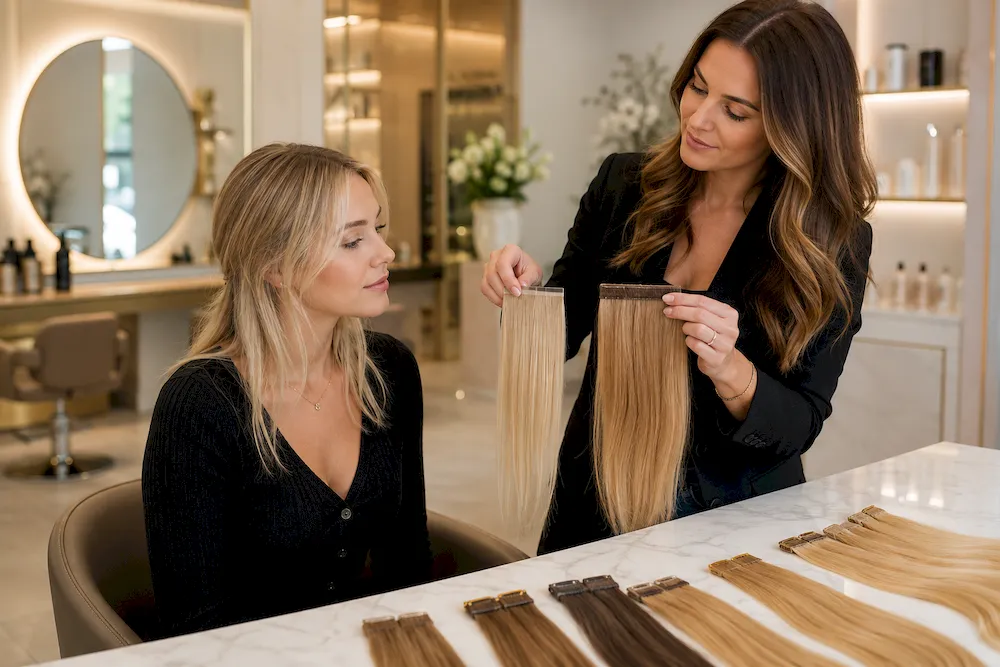
Tape-In Hair Extensions
Tape-in hair extensions are one of the most popular salon choices. They are flat, lightweight, and comfortable. They are applied with adhesive tape and placed close to the scalp.
Tape-ins are good for clients who want a natural look and easy maintenance. They are also suitable for many hair types, especially fine to medium hair.
Main benefits:
- Flat and natural appearance
- Comfortable to wear
- Fast salon application
- Good for volume and length
- Can be reused with new tape
However, clients should avoid using oily products near the tape area. Oil may make the tape slip.
Weft Hair Extensions
Weft hair extensions are made with hair sewn together in a row. They can be applied in different ways, such as sewing, beads, or other salon methods.
Wefts are a good choice for clients who want a full and thick look. They are often used for medium to thick hair.
Main benefits:
- Good for adding volume
- Suitable for full-head transformation
- Can create a beautiful long-hair look
- Available in different weft types
Genius weft and hand-tied weft options are often thinner and more comfortable than traditional machine wefts. They can give a more natural result.
Pre-Bonded Hair Extensions
Pre-bonded hair extensions are attached strand by strand. They usually use keratin bonds or similar materials. This method can create a very natural look because the hair is applied in small sections.
Main benefits:
- Natural movement
- Good for detailed placement
- Long-lasting result
- Suitable for many hairstyles
This method takes more time to apply. It also requires professional skill. It is better for clients who want a more permanent salon service.
Clip-In Hair Extensions
Clip-in hair extensions are a temporary option. Clients can wear them during the day and remove them at night. They are good for special events, photo shoots, or clients who do not want permanent extensions.
Main benefits:
- Easy to use
- No salon installation required
- Good for temporary volume and length
- Can be removed anytime
Clip-ins are not the best choice for clients who want to sleep, swim, or exercise with their extensions.
Halo Hair Extensions
Halo hair extensions are also temporary and easy to wear. They use an invisible wire that sits on the head. The natural hair covers the wire, creating a simple and natural look.
Main benefits:
- No glue, tape, or beads
- Easy to put on and take off
- Gentle on natural hair
- Good for quick styling
Halo extensions are a good choice for clients who want a simple beauty solution without salon maintenance.
Match the Hair Color Carefully
Color matching is one of the most important steps when choosing hair extensions. Even high-quality extensions can look unnatural if the color is wrong.
Check the Hair in Natural Light
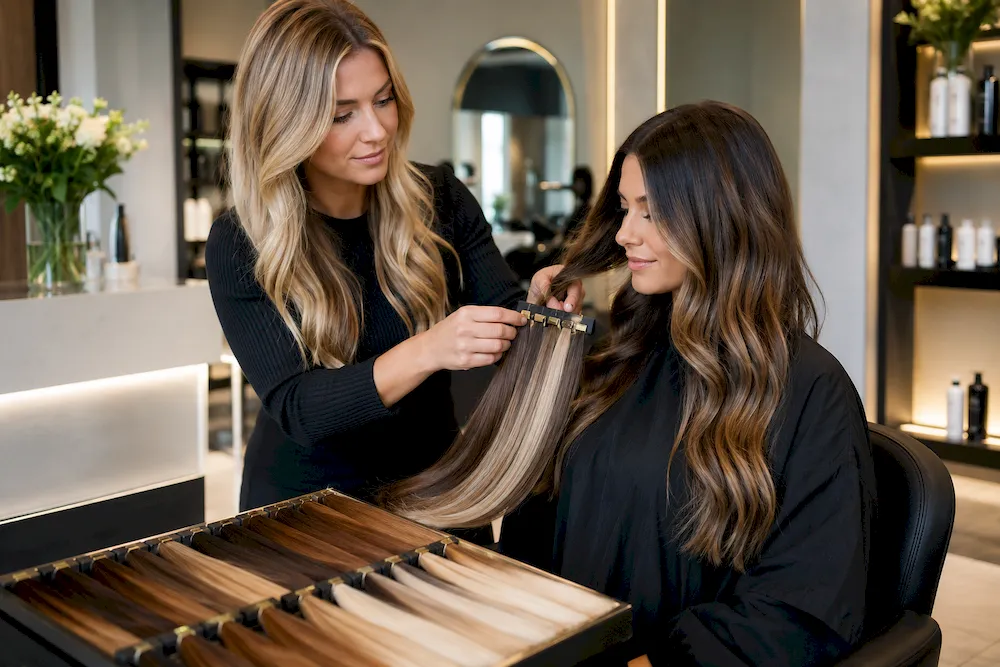
Salon lighting can change how colors look. It is better to check the client’s hair color in natural light when possible. Look at the mid-lengths and ends, not only the roots. Extensions usually need to match the lower part of the hair.
Use Mixed Colors for a Natural Look
Many clients do not have one flat hair color. Their hair may include highlights, lowlights, or natural color differences. In this case, mixed-color extensions can create a better blend.
Popular color choices may include:
- Solid colors
- Highlight colors
- Balayage colors
- Rooted colors
- Ombre colors
A good color match can make the extensions look like the client’s own hair.
Choose the Right Length and Weight
The right length and weight depend on the client’s natural hair and desired style.
Do Not Choose Extensions That Are Too Long
Very long extensions may look beautiful, but they are not always the best choice. If the client’s natural hair is short, very long extensions may be hard to blend. The result may look uneven.
For a natural look, choose a length that blends well with the client’s own hair.
Use Enough Hair for a Full Look
If you use too little hair, the extensions may look thin at the ends. This is especially important for clients with thick natural hair. They may need more hair to create a balanced result.
As a general rule:
- Fine hair may need less hair
- Medium hair needs a normal amount
- Thick hair usually needs more hair
The goal is to make the extensions look natural from top to bottom.
Consider the Client’s Lifestyle
Hair extensions should fit the client’s daily life. A busy client may need an easy-care option. A client who likes swimming or sports may need stronger and more secure extensions.
For Busy Clients
Tape-in extensions, halo extensions, or clip-ins may be good options. They are easier to manage and do not take too much styling time.
For Active Clients
Clients who exercise often should choose extensions that stay secure. They should also learn how to tie their hair gently and dry the roots after sweating or washing.
For Clients Who Want Low Maintenance
Temporary extensions like clip-ins and halo extensions are easy because they do not need salon maintenance. But they must be removed before sleeping.
For semi-permanent extensions, clients need regular salon appointments to move up or adjust the hair.
Focus on Hair Quality
Hair quality has a big effect on the final result. High-quality human hair extensions look more natural, feel softer, and last longer.
Human Hair vs. Synthetic Hair
Human hair extensions are usually better for salon use. They can be styled, curled, and washed more naturally. Synthetic hair is cheaper, but it may not blend as well and usually cannot handle heat styling in the same way.
For professional salons, human hair is usually the better choice.
Remy Hair and Virgin Hair
Remy hair means the hair cuticles are kept in the same direction. This helps reduce tangling and makes the hair smoother.
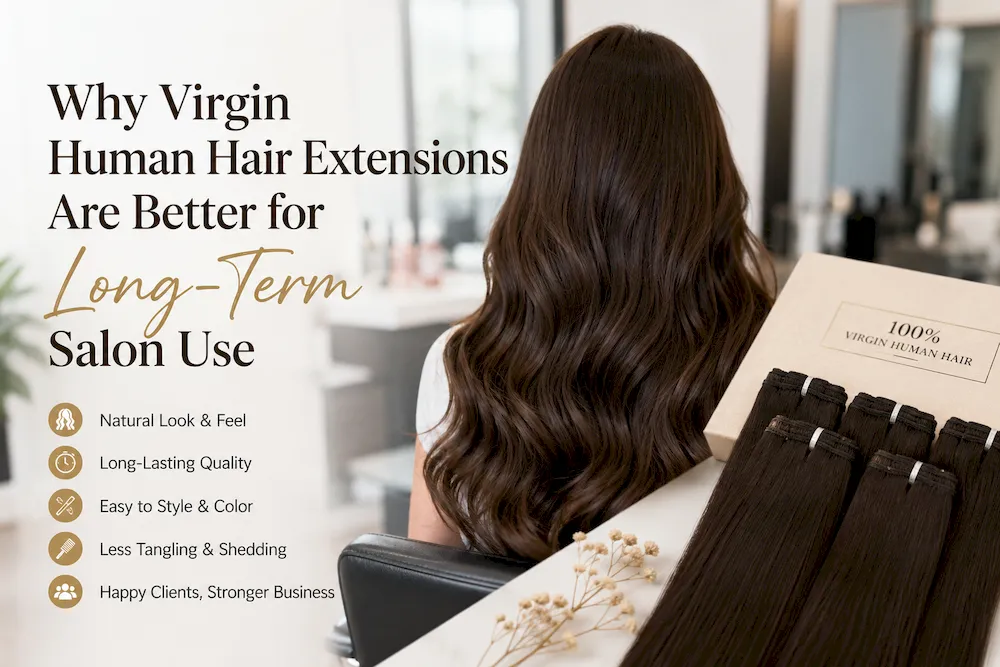
Virgin hair usually means the hair has not been chemically processed. It is often stronger and more natural. For clients who want long-lasting quality, virgin human hair extensions can be a good option.
Teach Clients How to Care for Extensions
Even the best hair extensions need proper care. If clients do not care for them correctly, the hair may become dry, tangled, or damaged.
Basic Care Tips
You can give your clients simple care instructions:
- Brush the hair gently every day
- Use sulfate-free shampoo when possible
- Do not sleep with wet hair
- Avoid too much heat styling
- Use conditioner on the mid-lengths and ends
- Keep oil away from tape or bond areas
- Visit the salon for maintenance on time
Good aftercare helps the extensions last longer and keeps clients satisfied.
Work with a Reliable Hair Extension Supplier
For salons, choosing the right supplier is also very important. A reliable supplier can provide stable quality, consistent colors, and professional support.
When choosing a supplier, consider:
- Hair quality
- Color options
- Product types
- OEM or private label service
- Packaging options
- Delivery time
- Customer service
- Quality control process
A good supplier can help your salon build trust with clients. It can also help you save time and reduce product problems.
Final Thoughts
Choosing the right hair extensions for salon clients is not only about picking a beautiful product. You need to think about hair type, color, length, lifestyle, budget, and maintenance. The best extensions should look natural, feel comfortable, and match the client’s daily life.
For fine hair, lightweight options like tape-ins or genius wefts may be better. For thick hair, wefts or pre-bonded extensions may give a fuller result. For temporary use, clip-ins and halo extensions are simple and flexible.
When salons choose high-quality human hair extensions and give the right advice, clients can enjoy beautiful, natural-looking hair for a long time. A good hair extension service can also help your salon gain more loyal customers and grow your business.